Who Pays for the Post-Nikah Dinner? Traditions and Trends
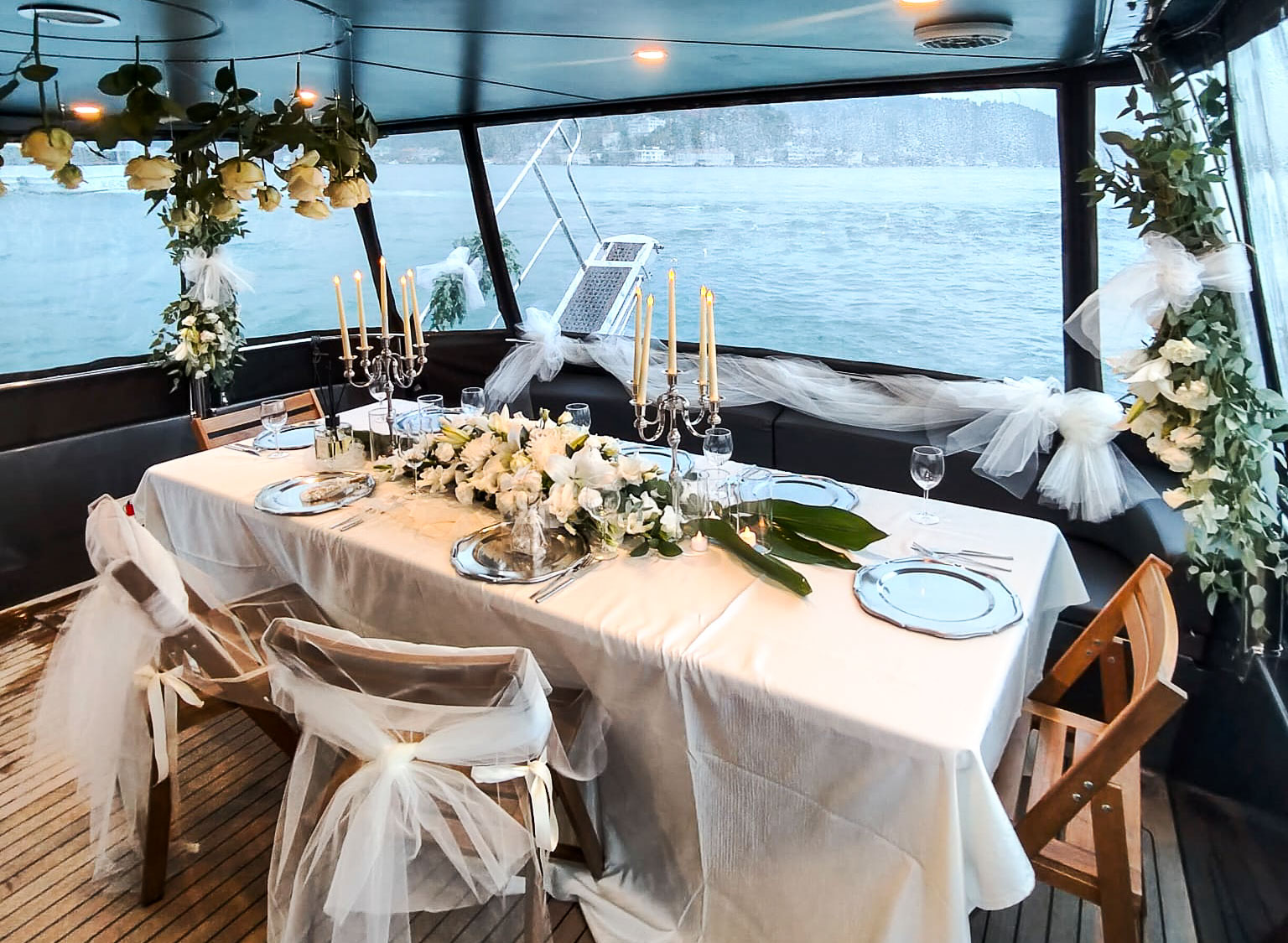
Choose your yacht, customise every detail and book your Bosphorus event online. Starting from: 299.000 TL
View packages & prices1. What Do Traditional Customs Say? The Groom's Side or the Bride's Side?
In Turkish wedding traditions, the expenses of the marriage process follow a certain division of responsibility. In the traditional framework:
-
Henna Night and Engagement: Usually the responsibility of the bride's side.
-
Wedding Venue and Main Wedding Dinner: Traditionally an event hosted by the groom's side.
If the nikah (civil wedding ceremony) is held on its own, without a separate wedding celebration, and a dinner follows, traditional families regard this dinner as the "wedding dinner," and the groom's side or the groom covers the cost of the dinner.
Today, however, families tend to find common ground rather than follow strict rules. Especially when both sides invite an equal number of guests, the in-laws may offer to split the bill in half, or the costs may be covered from the couple's joint marriage budget.
2. The Modern Approach: The Couple's Own Budget
Today the average age of marriage has risen as young people have gained economic independence. This has directly changed the balance of wedding spending:
-
Joint Marriage Fund: Instead of placing a heavy financial burden on their families, many couples prefer to organize the post-nikah dinner with their own savings.
-
Choosing a Venue by Budget: When the couple pays the bill, the venue is chosen according to their budget ceiling: an elegant fish restaurant with a fixed per-person menu, a boutique bistro, or an intimate boat tour.
-
Guest Limit: For dinners the couple pays for themselves, the guest list is usually kept between 20 and 50 people (immediate family and closest friends only), which keeps the cost manageable.
3. Can a Nikah Dinner Be "Going Dutch"?
Another concept that is becoming increasingly common among young people is for everyone to pay their own way at celebrations with friend groups (going Dutch). Couples who want to enjoy a fun evening with a large group of friends after the nikah but don't have the budget to cover the entire bill may choose this approach.
The most important etiquette rules to keep in mind here are:
-
State It Clearly and in Advance: Explaining the arrangement to guests at the last minute at the venue is extremely impolite. When the invitation is sent or extended verbally, it should be politely conveyed that the event is a "celebration get-together" and that everyone will cover their own menu.
-
Agree on a Fixed Menu: Guests need to know in advance how much they will pay at the venue. A fixed per-person price with or without drinks (for example, 1,000 TL or 1,500 TL) should be agreed with the venue, and this information should be shared with the guests beforehand.
-
Family vs. Friends: Making immediate family members such as parents and siblings pay their share is traditionally frowned upon. Couples usually cover the immediate family's meal, and go Dutch at the after-party or evening celebration with the wider group of friends.
4. Invitation Wording and Communication: How to Avoid Misunderstandings
The most awkward situation that can happen at a nikah dinner is guests arriving believing they have been invited, only to be handed the bill at the end of the night. Preventing this depends entirely on the language you use:
-
If You Are Paying the Bill:
"We would be delighted to have you with us at the celebration dinner we are hosting after our nikah ceremony."
This wording is a clear invitation; it means the host will be treating their guests.
-
If Guests Will Pay Their Own Way:
"After our nikah, we are getting together with our friends for a lovely evening. The fixed menu at the venue is [Amount] TL per person, and we kindly ask friends who would like to join us to let us know by [Date] so we can make the reservation."
A transparent and courteous explanation like this surprises no one and also gives those who prefer not to attend room to politely decline.
5. Budget Management Tips for Planning a Post-Nikah Dinner
Whether the groom's side or the bride's side takes on the bill, or the couple pays together, these steps are lifesavers for keeping the event budget under control:
-
Choose a Fixed Menu Instead of À La Carte: Because limits can easily be exceeded with à la carte choices, agree with the venue on a fixed menu that includes cold meze, a hot starter, a single main course and standard drinks, to avoid unplanned extras.
-
Set a Drinks Limit: Alcohol is the item that causes the biggest swings in the bill. Choosing "limited drinks" (for example, 2 glasses per person) or entirely "soft drinks included" packages keeps the total cost predictable.
-
Track RSVPs (Attendance Confirmations): Billing is based on the number of guests you confirm with the venue. Finalizing which invitees will not attend at least 48 hours beforehand keeps you from paying for unnecessary plates.
-
Discuss Cover and Service Charges with the Venue: Some venues add a 10-15% service charge to the menu price. When making the agreement, be sure to have your contract state whether the price includes the cover charge, gratuity and VAT.
In Summary
Although the post-nikah dinner is traditionally paid for by the groom or the groom's side, the most common and sensible approach today is to cover it from the couple's joint marriage budget. For larger friend celebrations, guests paying their own way is a fully accepted modern alternative, provided it is stated transparently in advance. The one rule that matters is to set up clear communication from the start so that no one feels embarrassed at the end of the night.
Civil Ceremony and After Party on a Boat
Choose your yacht, customise every detail and book your Bosphorus event online. Starting from: 299.000 TL
View packages & pricesPopular Posts
The Importance of Yacht Selection for Corporate Dinner Events: Uncovering "Experience Architecture"
The Importance of Yacht Selection for Corporate Dinner Events: Uncovering "Experience Architecture"

Weekly Boat Rentals in Istanbul
Get away from the crowd, traffic and noise of Istanbul and imagine a holiday full of luxury and comfort in the middle of the blue. This distinctive experience, which we often think is limited to a few hours of Bosphorus cruises, actually opens the doors to a completely different world: Weekly boat rental. Living on the sea in Istanbul and its surroundings for a week, waking up to a different bay every morning and watching the city's skyline at sunset is literally the pleasant escape plan. In this article, we discuss the details and routes of weekly yacht and boat rental in Istanbul and the advantages that this distinctive holiday will offer you.

Bosphorus Wedding Event for 50 Guests
Wedding Event for 50 People on the Bosphorus: An Unforgettable Night on a Yacht, Boat and Ship, If you dream of a romantic wedding on the sea in the enchanting atmosphere of Istanbul, a 50-person wedding event on the Bosphorus might be just for you. Particularly in recent years, yacht weddings, boat weddings, and ship wedding events, which stand out among boutique and private event concepts, have become one of the preferred options by couples due to their elegance and distinctive view.

Bosphorus Yacht Wedding in Istanbul
Would you like to crown the most special day of your life in the distinctive blue of the Bosphorus, accompanied by historical mansions and priceless views? Going beyond traditional wedding venues and having an unforgettable boat wedding experience with your loved ones is no longer just a dream. When the romantic atmosphere of the Bosphorus combines with luxury and comfort, every moment turns into a fairytale moment that will be remembered for a lifetime.
Most Romantic Places to Propose in Turkey
Turkey is not just a country with its east and west, blue and green and thousands of years of ancient history; It is a huge plateau that hosts the world's greatest love stories. By 2026, Turkey has strengthened its place in the top three in the world in terms of "destination proposal". From the mystical skies of Cappadocia to the sparkling bays of the Aegean, every corner is waiting for you for the most important "Yes" answer of your life. Here is a guide to the most romantic places to propose in Turkey, suitable for every character and dream.
Great Reviews

For anyone visiting Istanbul and seeking a waterside venue, I wholeheartedly recommend Derya Yachting. The yacht was clean, Derya and her team were professional, and they handled everything wonderfully. They were incredibly accommodating, even with my spouse's food allergies. Whether for a wedding, a party, or any other social event, I cannot recommend Derya Yachting enough.
I strongly recommend Derya Yachting to anyone visiting Istanbul and looking for a venue on the water. The yacht was clean, Derya and her team were professional, and they handled everything wonderfully. They were even very accommodating of my spouse's food allergies. Whether it's for a wedding, a party, or any other social event, I cannot recommend Derya Yachting enough.

On September 22nd, we had the pleasure of celebrating our son and daughter-in-law's wedding on Derya Yachting's yacht in Beşiktaş, Istanbul. It was a very special and unforgettable night for us. ❤️ The four-hour cruise along the unique beauty of the Istanbul Bosphorus made this meaningful day even more special. The Derya Yachting team truly did an outstanding job with the yacht's decoration; every detail was prepared with great care and elegance. The food was incredibly delicious, and our guests loved it. The entertainment and music were fantastic all night long; everyone enjoyed themselves to the fullest and created beautiful memories. We wholeheartedly thank the Derya Yachting team for their efforts on this special day. Thanks to your warm smiles, professionalism, attentiveness, and hospitality, our son and daughter-in-law's wedding will remain a beautiful memory in all our hearts. With the Bosphorus's unique view, the magnificent atmosphere, delicious food, and wonderful entertainment, we truly experienced a dream-like night. Thank you very much for everything. We will lovingly remember this beautiful night for many years to come. ❤️ With love and respect, Sevgi


Last night, we attended a company dinner event for 60 people on the Bebek waterfront. A female manager was present, and the staff personally attended to each of us. The manager herself meticulously managed the event, and we didn't experience any hitches. Far from being grim-faced as some might suggest, she was incredibly cheerful. In fact, her positivity and hospitality truly captured our attention and was a topic of conversation among our colleagues. We expressed our satisfaction and, as a result, secured an agreement for our future events. Everything, including the food, was perfect, delicious, and fresh. I extend my heartfelt thanks once again to the entire team and their management.

We worked with the Deryachting team for my cousin's wedding and had a truly wonderful experience. As my cousin lives abroad, I handled all the arrangements, but the team flawlessly planned everything down to the finest detail. Their communication was excellent, they were solution-oriented, and incredibly professional. Thanks to them, we had an unforgettable wedding completely stress-free. I wholeheartedly recommend them to everyone, and offer my endless thanks for all their hard work.


